
S5 · E1 20th May 2026
David Wheldon
It’s a ‘We Thing’: Creativity, Humility and Advertising’s Future
— Watch the Episode
— Show Notes
It’s a ‘We Thing’: Creativity, Humility and Advertising’s Future
This week on The MCA Prodcast Pat Murphy is joined by David Wheldon, President Emeritus of the World Federation of Advertisers (WFA). With a career spanning decades at agencies including Saatchi & Saatchi, WCRS, Lowe, BBDO and WPP before moving into global brand leadership at Coca-Cola, Vodafone, Barclays and RBS, David is one of the most respected and influential figures in advertising. He was appointed WFA President for the second time in March 2025 and is the recipient of an OBE and a Lifetime Achievement Award from The Drum.
Pat and David explore what it really means to build brands from the inside out. From David’s formative years at Saatchi & Saatchi, where “nothing is impossible” was literally carved into the steps, to his time heading global marketing at Coca-Cola, where his first humbling discovery was that nobody in the boardroom talked about advertising. David shares how the leap from agency to client side fundamentally reshaped his understanding of what marketing is, and what it takes to be a genuinely great CMO.
David reveals the inside story of his five-year stint at RBS as part of what he calls the ‘clean-up team’, overseeing the rebrand to NatWest and working to rebuild public trust after the 2008 financial crisis. His guiding philosophy: ‘It’s hubris that got us into this mess. It’s humility that will get us out of it.’ He also reflects on whether banks have truly learned their lessons from the crisis.
David approaches AI with optimism but clear-eyed caution. He argues that the big idea and the brand platform are more important than ever, pointing to MasterCard’s ‘Priceless’ campaign as a masterclass in a single advertising idea that has scaled across an entire business. But he warns that the industry isn’t being honest enough about the human cost of AI-driven change, and that job losses need to be part of the conversation.
David also reflects on his return as WFA President; stepping up to defend the organisation’s mission of protecting commercial free speech in the face of a legal challenge brought by Elon Musk, and why his independence made him uniquely placed to take on the role.
See David’s favourite ad: V&A Museum – An Ace Caff with quite a nice museum attached.
Hosted by Pat Murphy
Connect with Murphy Cobb and The Prodcast:
Murphy Cobb & Associates | The MCA Prodcast | LinkedIn | Instagram | Email
— This Week's Guest
David Wheldon
President - World Federation of Advertisers
— David's Favourite Ad
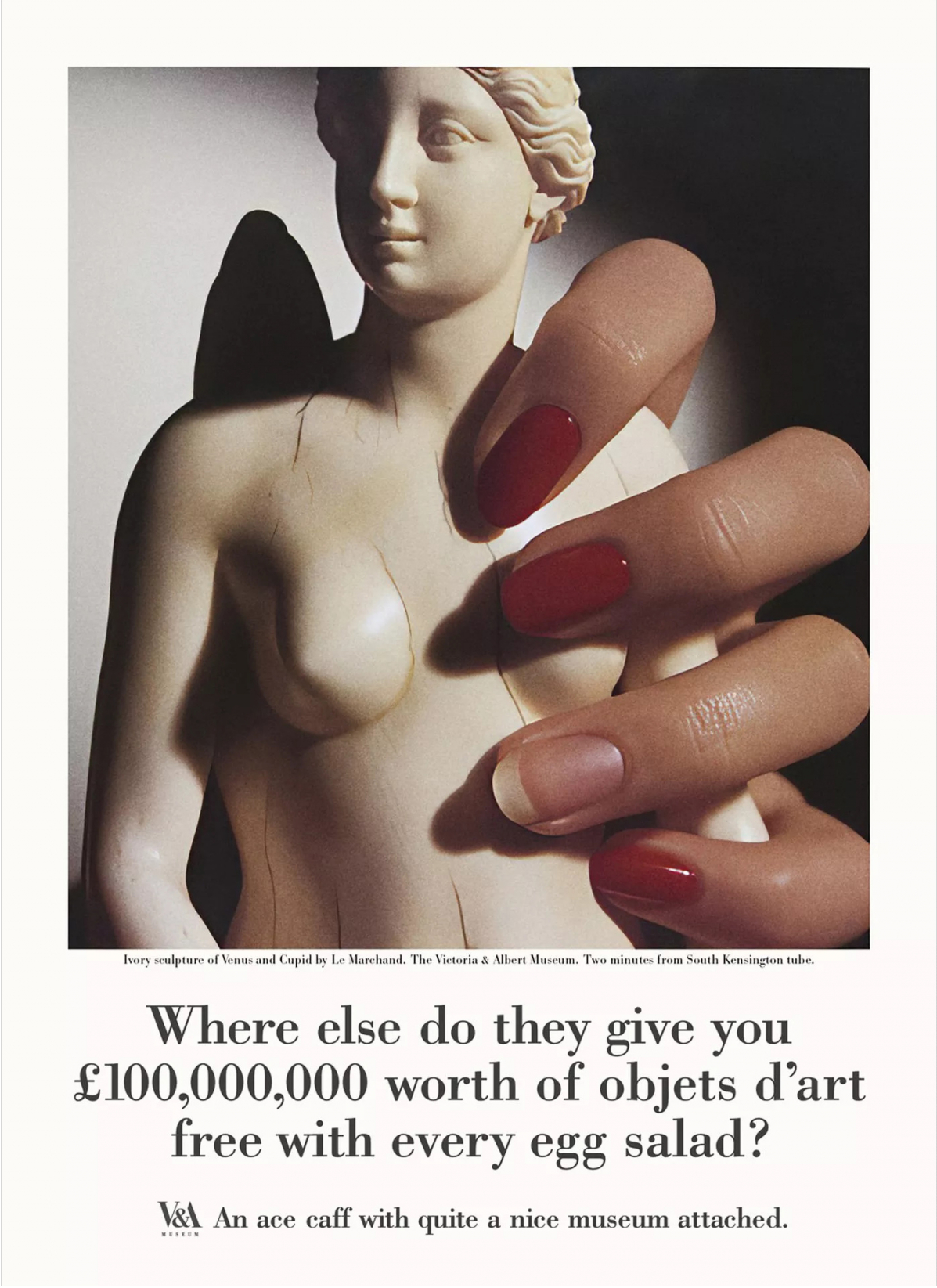
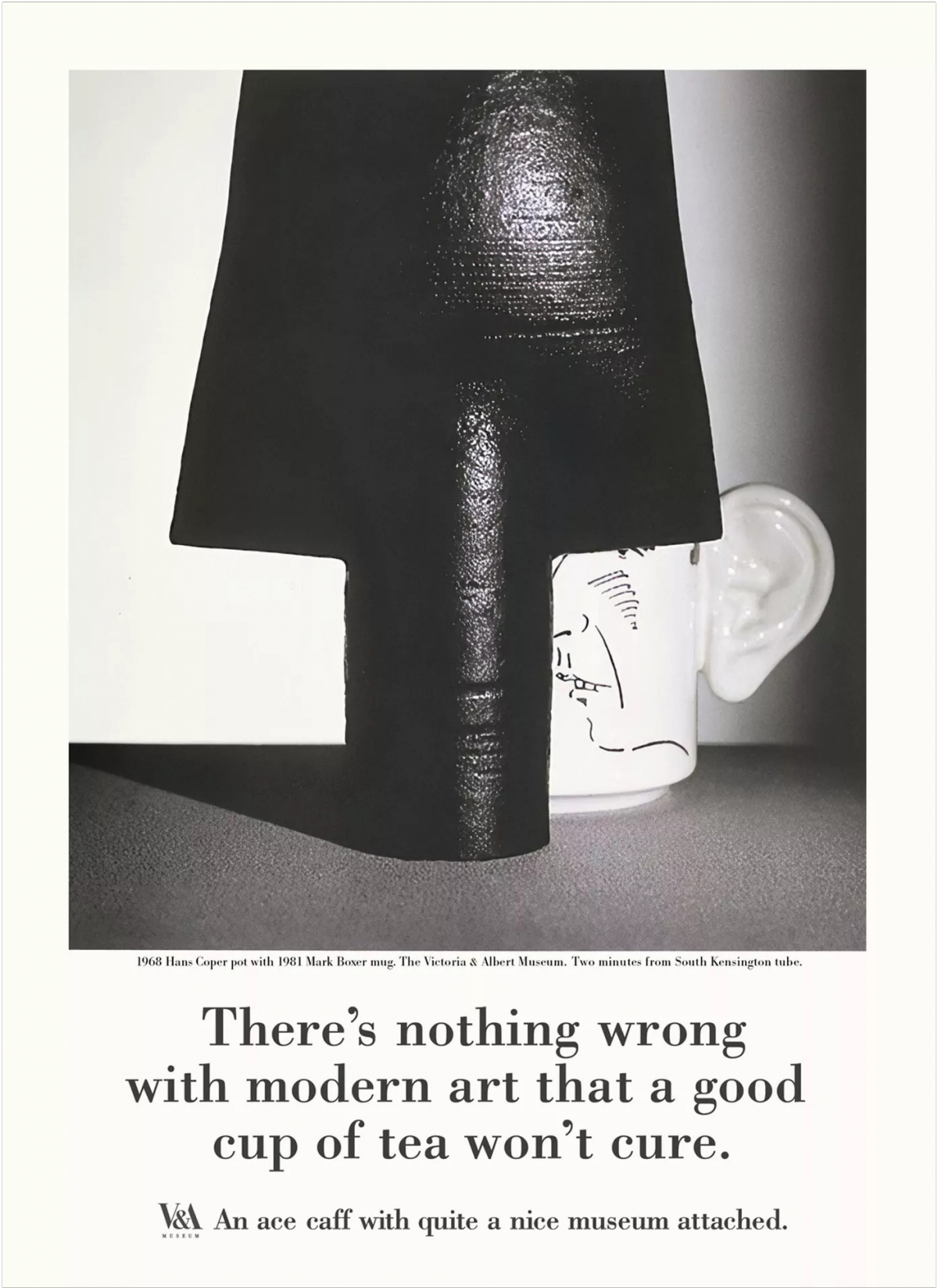
V&A Museum - An Ace Caff with a Museum Attached
— Full EPisode Transcript - Expand to read and search
— Full EPisode Transcript - Expand to read and search
Pat Murphy
Hi, and welcome to The Prodcast – your fix for everything innovative in advertising and production. I’m Pat Murphy, and I’ve been working in this industry for more than 35 years now. I’ve seen a lot of changes, but know there’s plenty more around the corner. Each episode, you’ll get to hear from one of the movers and shakers who is shaping the world of advertising for the future, and we’ll dive into some of the key challenges facing our sector today and how we’re best placed to overcome them.
Today we’re talking to David Wheldon, a legend and one of the most revered leaders in our industry. David is the President of the WFA, the World Federation of Advertisers. David has one of those careers that makes us all look like we’ve been on cruise control. He started at Saatchi & Saatchi and then went on to senior roles at WCRS, Lowe, BBDO and WPP, and then moved to global brand positions at Coca-Cola, Vodafone, Barclays and RBS. In March 2025, he was appointed President of the WFA for the second time and later named President Emeritus. Along the way, he picked up an OBE and a Lifetime Achievement Award from The Drum, which is probably a decent way to say that he actually knows what he’s doing.
David, it was good to see you recently. Thanks for coming onto my Prodcast!
David Wheldon
Well, Pat, great to see you, and thanks so much for having me. I always get slightly embarrassed about those kinds of introductions because it just happened.
Pat Murphy
But the thing is, you’re not exactly slowing down either, are you?
David Wheldon
No. I think it’s interesting. I told you when we chatted I first went into what they call ‘retirement’ with immaculate timing in March 2020, just as COVID kicked in, and that ruined all the plans. But I always say to people, I’m not retired, I’m semi-retired, because I think we need to keep our brains engaged and do whatever we can to push back the inevitability of this final chapter coming to an end. When people say things like ‘President Emeritus’, I always say, ‘Yes, I know – it sounds like I’m dead, doesn’t it?’ But I’m not yet. So I’m still at it, and nicely back in control of my time, which gives me more time to read about stuff, look at stuff, and try to understand what the hell is going on in our world, because an awful lot is going on.
Pat Murphy
There definitely is. It sounds like you’re having a lot of fun still as well.
David Wheldon
Yes, absolutely. I think that’s the fundamental agreement. Whoever first said it, and you and I share Saatchi and Saatchi in common – I think the first person I ever heard say it was Roy Warman, who said advertising is ‘the most fun you can have with your clothes on.’
Pat Murphy
You’re right, we did both start at Saatchi, and for me there was no better place to get a grounding. I remember walking up those steps every day, and it was engraved in the top of the steps: ‘Nothing is impossible.’ What an amazing place to start your career.
David Wheldon
It was, and for many reasons – such fond memories – because it was a meritocracy, first and foremost. If you were good, you progressed, and if you cared about what they cared about – and what they cared about was great creativity that worked and I love creativity in and of itself but advertising that works is a really, really important thing to be involved in. As we both know, Saatchi’s at the time was brilliant because up one end of the corridor there was great work being done, and at the other end there was a lot of money being made. In both cases it was work that worked, but they were happy to be somewhat chameleon about it as well. I loved it, I learned so much, and the memories we have from that time, the people we could talk about – it’s astonishing. It really was an astonishing time.
Pat Murphy
It was definitely probably one of the best places I’ve worked. Also one of the craziest places I think I’ve ever worked. There are plenty of stories, probably none of which we can recount on this podcast but maybe on another day over a drink.
David Wheldon
There was truth, nevertheless, in those words over the door. It instilled the belief that everything was possible and you could do anything. Now, sometimes that anything required more money than sense, but if you wanted to get a poster campaign up in London tomorrow, the place to go was Saatchi & Saatchi, because they would find a way to do it. Not all agencies had that unswerving belief in getting stuff done.
Pat Murphy
I totally agree. You once called yourself an ‘accidental careerist,’ which seems rather modest considering your amazing career, David. Which moments felt accidental to you?
David Wheldon
My word, you’ve done your homework! I think that was the first time I was interviewed by Campaign, when I got my Lowe Howard Spink job. The thing I was very clear about is that I wanted to get into advertising, and I got to that clarity late compared to others – I was probably 26 or 27. I went to Kent University, I got a 2:2 – a kind of disgrace to the education system that they gave me a degree, given the lack of effort I put in. Then I became an English teacher, wandered round the world, and when I wanted to get into a proper job, advertising was what I chose. The difficult bit was the year and a half it took me to get in.
But I got in and started at Saatchi & Saatchi, and where better to start? Everything that happened after that basically involved me saying no or yes at the right time. That’s how I’d define it looking back. I never had a plan beyond that one. I never thought, ‘I want to do this, I want to do that,’ and I seemed to do a good enough job for somebody to turn up and offer me another one. On the whole, I made the correct choices. I made one disastrous one, but that was entirely my fault, not the fault of the people that hired me. That’s where the ‘accidental careerist’ came from.
Pat Murphy
I think we have a few other things in common as well as Kent University, which I’ve only just discovered. I did fine art there, so that was great fun. And like you, I spent a lot of time trying to get into advertising. It was the one thing I wanted to do, alongside radio, which I’d been doing up until that point. I had to resort to desperate measures to get my first job in advertising. I think I managed to get in to see Don White, who was the creative director at McCann Erickson at the time, a very colourful character but an interesting first experience. Eventually I got my job at Saatchi & Saatchi through chatting to Jeff Stark and Paul Arden and people like that. I had the bestest time ever.
So you started in advertising and then went on to the brand side. I was at Procter & Gamble, and you were talking earlier about the differences between people who haven’t worked client-side and those who have. What did you really only understand about marketing once you sat inside the business rather than advising it?
David Wheldon
Another great question. My first client job found me going to live in Atlanta to be the worldwide head of advertising for the Coca-Cola Company. My early experience of sitting in agency meetings – often my brain was going, ‘Jesus, I used to say shit like that,’ without any understanding of what was going on inside the company. Not surprisingly, when I got that job, I was very excited and thought, ‘Obviously, Coca-Cola is only about advertising.’ The first humbling experience was to spend the first six weeks of my career, which happened to coincide with the annual presentation of each country’s business plan to the CEO, the CFO, and the CMO, who was my boss, Sergio Zyman. There were only six other people in the room and they were Sergio’s direct reports, and we weren’t allowed to ask any questions or say anything; we just watched. So I’m sitting there thinking, ‘Great, I can’t wait to hear them talk about advertising.’ Nobody mentioned advertising once.
On the outside, the agencies I’d been in thought it was only about advertising. This is not to say advertising wasn’t a hugely important part of Coke at the time – it still is today. But there’s a lot more to business than just the advertising bit.
To your bigger question about marketing: I also met some absolute geniuses. I won’t go about naming them because I’ll inevitably forget somebody. But some of the talent there… I was privileged to be involved in hiring. We wanted to hire 500 new marketing people around the world – one of Sergio’s initiatives – and we travelled around the world interviewing people. When I look at the greats of marketing over that time, most of them are people that got hired by Coke then. The geniuses who could work out how to get the pricing right, how to deal with the Pepsi problem in the Middle East etc, often underrated and totally not really understood by agencies. Now, I’m exaggerating to make the point, because of course some agencies are better than others at that. But it was an absolute humbling experience. ‘I thought I knew about all this stuff’. The one thing I know more and more as I get older is that I’m happy to say, ‘I don’t know.’ I’ll have an opinion on things, but we’re always learning — and there’s always a lot to learn.
Pat Murphy
I think that was the same experience I had when I went to P&G. I arrived as a slightly cocky younger producer thinking I knew everything, and then I found myself inside the P&G organisation and realised there were a lot of very bright, talented people. I felt somewhat humbled very quickly by being part of that organisation – everyone says it’s the Harvard of advertising, where you get your greatest training at Procter and Gamble and I did. What an amazing place to be. And that made me a better person in production when I came back out into the advertising world again.
David Wheldon
Yes, and as I think we said when we were chatting, I always ended up hiring people into my communications team who had worked in agencies when I could, because that understanding of what’s happening on the other side of the fence is really crucial. The mutuality of it is a good thing. I was given the challenge by Sergio in September ’93. He said, ‘Look, in March next year, I’ve got an analyst meeting ahead of our results, and I want to show great celluloid’, because that’s what we used to say in those days, ‘for every single brand we’ve got. Your job is to get it. Off you go.’ It was an amazing task, but I didn’t have enough people. So, having observed this lack of understanding in myself, I came up with the idea of getting interns from agencies — for two reasons. They could come and see what actually happened inside the company, and then go back to their agency having learned something. And I could get some great people working with me.
Michelle McKetrick, for instance, from McCann Seattle, is these days a very good friend, latterly Chief Customer Officer of Primark. So I got to work with great people, they got to help, and they took the learning back. I see that in many, many successful relationships, the understanding of how both sides work is pretty crucial, especially as times get tougher, and they do appear to be getting tougher and tougher.
Pat Murphy
You worked at the banks as well – you worked at RBS for a time. Was that around when things were going awry back in 2008?
David Wheldon
No, I joined RBS as part of what Ross McEwan, my boss and the CEO, described as the ‘clean-up team’ in 2015, and I had a five-year stint there. I was on the ExCo, and my parting gift was to get rid of that brand – which had long been dead before I got there, RBS and get the group renamed as NatWest. Nice to see them flourishing, meanwhile. But that was also humbling, because we were a state-owned bank that had got into a crisis of its own making and had never really said sorry for doing that. One of the things with Ross, who was a brilliant CEO, I used to say to him, ‘You’ve got to go out there and apologise for this. I know it’s not your fault, but you’ve got big shoulders, you’ve got to do it.’ And we paid all the fines, cleaned up the reputation, and on we went. That was a really great experience on many levels.
But I’m not sure that banks have learned the lessons of 2008 fully. I found banking to be an extractive business. ‘Money makes the world go round’ is one truth, and nothing happens without banks doing things the right way. But equally, if you look at the disproportionate amount of money that is taken out of the system by the very people making it, something’s not right.
Pat Murphy
Last week we had our twentieth anniversary at Murphy Cobb, and one of the words that kept cropping up was ‘trust.’ In that time when you were part of the clean-up crew at the bank, how do you go about doing that when the public has stopped giving you the benefit of the doubt?
David Wheldon
Well, let me start by talking about the fact that RBS was an internal construct. The Royal Bank of Scotland is the bank that RBS was born out of. And ironically, what the data showed is that the customers of the Royal Bank of Scotland, first of all, they called it ‘the Royal Bank.’ They didn’t call it RBS. And secondly, they were pretty proud of being customers of the Royal Bank and understood what had happened. Even though the trust had gone, it was quite straightforward to rebuild by focusing again on the Royal Bank itself.
Someone had decided at the time that it would be much better, for reasons of production to do everything once and then just stick a different logo on the end. So if you were watching Sky Sports, you could see a NatWest mortgage ad, and if you flipped to Scottish TV, you’d see exactly the same film this time with a Scottish accent and a logo at the end. As I used to say to people: ‘When you care so little about your business and your brands, customers can’t help but think you might care so little about their money.’ So we rebuilt the brands primarily from the inside out, with humility. I said to Ross one day, ‘It’s hubris that got us into this mess. It’s humility that will get us out of it.’ Just do what you do properly, honestly, apologise for what those before us got wrong, and do everything you can to get it right. Slowly but surely, the reputation returned.
But RBS was already a dead brand. It had been built for internal purposes of global branding under Fred Goodwin’s aegis. He did all the things you’d do if you were building a global brand, sponsoring Formula One, getting the name known around the world, all textbook stuff, very well done in every regard other than the business that went alongside it was not fit for purpose, and that’s why the financial crash happened in the way it did. If you go and watch The Big Short again – what a great film. Did anybody actually end up where they should have done as a result of all of this? What the public would quite like is some of this. That’s how bad the trust had become. But it got rebuilt, slowly but surely.
Pat Murphy
Well, you must have done a good job, because I’m still with NatWest after all this time.
David Wheldon
There you go. What we did from a marketing perspective was focus fully on the customers and remember what a big bank it was and how well we served the customers. Because in the day-to-day data, you could see that people were still there because they were happy. But the internal debate we’d have is, the person running the retail bank would say, ‘We’ve got incredibly loyal customers.’ To which I used to say, ‘No, no, no – you’re confusing inertia with loyalty. People are here because people don’t change their banks. You have to remember that first and foremost, and then give them reasons to be delighted to be your customers.’
The world of banking was a good place to learn every day again, but also a good place to apply the very principles I’d learned right at the beginning: do what you say you’re going to do. Communicate clearly. Communicate engagingly, and always be open to learning and take feedback. You won’t usually get things that wrong. It’s not rocket science we’re talking about.
Pat Murphy
And you got your OBE, of course. Who presented that to you, was it the Queen?
David Wheldon
No, it was actually he who is now King – it was Prince Charles at the time, under Covid rules. I always like to point out, I think it was Kevin Duncan who I worked with at Lowe said to me. He said, ‘My dad was given an OBE, and he said to me: Do you remember what it stands for? Other Buggers’ Efforts.’
Pat Murphy
I’ve never heard that. That’s great.
David Wheldon
Which is entirely appropriate, because you can’t do anything in our business without working with great people and collaborating with them. It was lovely to get the recognition. In fact, the very last thing the King said to me as he shook my hand and dismissed me was, ‘Isn’t it nice to know that work like yours is recognised in this way?’ And I said, ‘I couldn’t be more honoured, Your Highness’ – because I’d forgotten I was supposed to say ‘Your Highness’ as he bowed me out. But a very special moment. Courtesy of all the people I’ve worked with, not just for me.
Pat Murphy
You say ‘Other Buggers’ Efforts’, I love that. And it resonates with the phrase you’ve used before: it’s a ‘we thing,’ not a ‘me thing’ – working in advertising.
David Wheldon
It is. My youngest son used to say to me, you’ll forgive me for saying this ‘Dad, shut the fuck up with that we thing,’ because this was the time when we were doing too many calls like this and they could be overheard. But it’s true. In the early days at Saatchi’s, I had a lot of clients who I’d put in the swaggering, ego, arrogant box, and that’s not a good way to behave. They were very keen on the ‘me’ version of the world. So I learned pretty early: no, no, no, it’s a ‘we thing.’
There’s something we used to say about account handlers: you’ll do very well as long as you stick your chin out and allow somebody to swipe you if something goes wrong, and if something goes right, you’re happy to stand in the background and watch other people get the credit, you’ll be fine. I think that’s right, because it is a team game. I love the creative people in our industry, and they need looking after and nurturing in a special way because they’re special people. Both of us can probably write a good ad, I think I can write a good ad. Can I write a great one? No. I’m totally in awe of the people that can. And they should be respected for it. It is a team game. Nothing happens without great people making it work.
Pat Murphy
Let’s move on to the hot topic: AI. Do you think that in this new world of AI and other emerging technologies, we can still find outstanding, breakout big ideas as much as we used to?
David Wheldon
It’s a fantastic question, Pat. Yes, I do because I believe in the power of human creativity. I know you’ve had the great Sir John Hegarty on this podcast before, and he talks very eloquently about each technology as it’s arrived and the threat it was perceived to pose – printing, way back when, and so on. Here we are with another technology that appears to be a threat, but remember: it’s just a tool to help us be better at what we do. And I think that’s true. But this is the first time though in my career I actually look and think, ‘Hang on a minute.’
I get asked to talk about ‘new marketing’ quite a lot. What I talk about is: that’s the wrong question, because there’s nothing new about marketing. It’s what it’s always been. What’s new is the speed of the feedback loop and the technology available etc. We used to say to clients, ‘You can have two of these three things: fast, cheap, or good – what do you want?’ Now clients have every reason to expect is all three. You can see that happening. Is that a threat to the big idea? No, absolutely not. Do brands need big ideas, big brand platforms as we talk about today. The creative idea, when viewed through a business lens, needs to be a brand platform. How can this help our business grow? How can it resonate in every way?
I think it’s all about hearts and minds. I’ve heard people say it’s all about ‘hearts and machines’ now. You do indeed need to know how to get the algorithm to keep your brand reputation where you want it, as well as winning the hearts-and-minds bit. You’ve got to be multi-skilled now. But I don’t see it as a threat, because I’m an optimist. We have to believe this is going to be great. The danger – and you can see this at the moment – is that nobody’s talking enough about the jobs that are being lost as a consequence of it. If we forget that human side of it, we’re going to get in trouble. At the event you and I attended, people were saying, ‘Blacksmiths – who cares? There used to be lots of blacksmiths, we moved on, there aren’t anymore.’ But I don’t think it’s directly analogous. We’ve got a real threat to business structure and capability, and people need to pay attention to that.
Pat Murphy
I agree with you.
When I trained at P&G, everything was about the advertising idea and how it could translate into every channel but that was when TV, radio and print was around. Do you still subscribe to that in a mega multi-channel environment?
David Wheldon
I do. The brand I always like to highlight here because this brand idea started as an advertising idea — is MasterCard and ‘Priceless,’ which was done by McCann Erickson a very long time ago. In fact, McCann Erickson would have been paid full commission at the time they came up with it, that’s how long ago it was. And ‘Priceless’ has delivered a remarkable brand platform for MasterCard. They now deliver priceless experiences. Take the MasterCard McLaren team – if you’re a MasterCard customer, you can get never-before-had experiences through that sponsorship. The brand enables that. It’s the same idea. They have taken the same idea, built on and used across the entire business, and it’s brilliant. They are brilliant for doing that.
My predecessor as President was the CMO of MasterCard, Raja Rajamannar. I asked him once, I think in a podcast – ‘Do you think they were paid fairly for what they delivered?’ And he talked very proudly about the equivalent commission rate today for the idea. Yes, I do think brand platforms can work very well, and it’s lovely to celebrate one that started only as an advertising idea but has grown far beyond that. I could name lots of brands that do the same thing.
Pat Murphy
Let’s touch a bit more on production. We’re seeing a lot of the big holding companies trying to retain that part of the process – the Omnicoms and the WPPs setting up very very big production arms. Given your role at WPP, what’s your view on that? Because it’s having a massive impact on the rest of the production industry.
David Wheldon
I’m not sure they’re doing the right thing. They must do what they think they need to do. But let me talk about this from a client perspective. Clients want brilliant ideas, brilliantly executed, at pace and for good value. That’s always been done by human beings who you get to know, who understand your business and are part of the team. And therefore as soon as you disaggregate the team, that becomes more difficult. It also enables clients to think, ‘Actually, there are other people ringing me up about production – maybe I’ll talk to them.’ So I think it’s going to cause clients to look at things in a way they weren’t necessarily doing before, and I’m not sure that’s been fully thought through.
And this is before you get to the impact of AI. Now if you look at the great production houses are flourishing, actually. The reason they’re flourishing is they still do a brilliant job, they’ve still got brilliant talent, and a lot of their talent is actually freelance – which is why they don’t have an overhead problem. To be brutal about the holding companies: when they say they’re ‘downsizing’ and ‘right-sizing,’ it’s because they never managed their cost base correctly against their income, and now they’re fixing that at the cost of human beings. It’s not really thought through from a client lens, it’s thought through from their lens and that, I think, is a dangerous thing to do.
Pat Murphy
I definitely think it’s about retention of revenue rather than starting with a blank sheet of paper and designing the thing from the ground up. And there’s so much great talent out there – every job requires something different, so you need access to the whole global landscape of creative vendors in my personal opinion.
David Wheldon
But Pat, you must have seen this change. If you go back to when you started and look at the business you’ve now built, the changes must be astonishing to behold.
Pat Murphy
We’ve had to morph and adapt for all of the big changes and we’ve had numerous changes over the last 20 years, or the last 40 years since I’ve been in the advertising production business. It’s moving very, very quickly right now – faster than it’s ever moved before. The next few years I can’t predict where it’s going to end up in the next few years, but it’s fascinating. I love the business, always have. I love advertising. I’m excited about the changes because I think the control can now be back in the hands of the clients. Clients are moving towards wanting their own internal capability and building their own internal resource around some of this, and part of that is driven through the conversation about trust we discussed earlier. They want to have more control over their outcomes.
David Wheldon
Yeah. Exactly. When you worked at P&G, you were an in-house producer. When I went to Coca-Cola, we had in-house producers – I hadn’t seen that before. The big companies could always do that. Now any size company can, because the costs have shifted. I think that’s going to happen more. But the agencies that are flourishing are on the whole, the independent ones. They’re the ones that have still got in-house producers, still build careful relationships with production companies and directors, and manage to do all of that through a good understanding of the importance of procurement on both sides of the fence. This is why I remain really optimistic for the business and for the output of it.
Pat Murphy
I totally agree.
What advice would you give to a young person now coming into the creative or production industry who’s trying to do things slightly differently? What advice would you give?
David Wheldon
Well, first of all, remember that we’re all learning every day, and learn from the people around you, not just the screen in front of you. What I loved about Charlotte Street is that you could ask people questions and they didn’t mind answering them. They’d take the time, and you could learn through experience, and it built you. So: remember you’re always learning. Remember to be yourself, and be passionate about what you want to do and why you want to do it. As long as you have that clarity of ‘I’m here because I love this business and I want to learn and get better at it’, you’ll be fine. My advice is believe in yourself, believe in what you do, and do not have fear in your soul.
Pat Murphy
I love that. That’s Fantastic.
David, what do you think distinguishes the best CMOs and brand leaders today from just merely busy ones?
David Wheldon
I think the very best ones and I get the privilege of talking to a lot of them through this same vehicle, podcasts – are the humble ones. The ones who know they’re always learning, the ones who are empathetic leaders and good human beings, and the ones who are prepared to defend their work and their team’s work and take it on the chin when necessary. They’re usually ego-free. Increasingly, and this is also great to see – there are more and more great women CMOs. I don’t remember seeing many of those when I started in the business. That mix of focus, empathy, humanity, learning, driven. Driven to get the job done – that’s what you need.
And then absolutely the ability to hire the capability that you can’t possibly have yourself, because you can’t know about everything and you can’t pretend to. It’s perfectly all right to say, ‘I don’t really understand that, but here’s the good news, I’ve got somebody else who does.’ Build the right team. And then, crucially, given the context we’re talking about, respect the external talent that you need to get your job done. The very best CMOs are really, really good at that too.
Pat Murphy
This is the second time you’ve done this job. What’s different this time around to the first time you were in that role?
David Wheldon
Well, the reason I’m doing it, which I’ll touch on, is that no one else could do it because of the overhanging legal case brought by Musk. What’s different is having to defend an organisation that punches massively above its weight, one that is only here to protect commercial free speech and to help people learn from each other. It’s an astonishing organisation, and clients are incredibly generous with their learning with each other. So what’s different is the legal pressure. I have to do this because nobody else could, because I don’t work for a publicly quoted company anymore. But I’m a bit like their uncle: I know the organisation well, I know the people well, and I’m just here to make sure they thrive and survive. Thriving they are, and survive they undoubtedly will.
But let me add a couple of serious things here. The challenges the macro-economic environment is causing the industry are one thing. Then there’s AI, and all of these pressures come together at the same time. I’ve never seen clients under as much pressure as they are. I’ve never seen clients under the pressure to deliver cost savings, and a lot of that is driven by the apparent promise that AI can do it all. Ironically, the one data point I’ll use – Two years ago, when the procurement part of the WFA were asked whether they saw AI as a threat, something like eight per cent said they were worried it might impact their job. Last year that had gone up to over 30 per cent, because most people in the numbers side of businesses are thinking, ‘AI is going to clean this up.’ So, more pressure. But what I also see, and therefore celebrate, is more collaboration, more people willing to work with each other, trying to do the right thing in the right way to get the best outcomes. That’s what makes the WFA great, and it always will. But it’s a people thing, too. So sorry, Pablo, as my son would say, it’s a ‘we thing,’ not a ‘me thing.’
Pat Murphy
Exactly. And you have some great people at the WFA, I know Laura has just joined you as well recently.
So David, if someone remembers one thing about you and what you stood for in this industry, what would that be?
David Wheldon
Passion for creativity, I hope. Humility, I hope. And collaboration skills. The thing I like to see is the number of people I’ve worked with along the way who are now remarkably successful in their own right. I take immense pride in that. So, trying to help talent develop. That’s not one thing, I know. But I think it is passion for creativity, first and foremost.
Pat Murphy
For me it’d be passion for everything in the business, and passion for the people. One of the great things about being in this industry is that I feel like I’ve worked all this time, but it hasn’t felt like a job. It really has been… maybe somebody will find me out one day, that I’ve managed to blag my way through life without doing any work in the traditional sense. But it’s been a lot of fun.
So David, look, I’ve only got one more question to ask because time has flown by on this podcast. It’s the question we have to ask all of our guests, as it’s become a highlight. What is your favourite ad of all time?
David Wheldon
Oh, crikey. Well, I’m going to go with one and this is a lack of humilty I hasten to add. I think one of the ads I was lucky to be involved in has had a remarkable impact for very little money. It was for the Victoria and Albert Museum: ‘An Ace Caff with Quite a Nice Museum Attached.’ That changed the way people thought about marketing cultural institutions. I had the great joy, a couple of years ago, of sitting inside the V&A at a Marketing Group of Great Britain event when the current director said, ‘This institution’s future direction was set the day that Saatchi & Saatchi gave us this genius of an idea.’ So that’s my favourite, and I know it’s not very humble to say that, but I like it because it shows the impact of passion for creativity and you can make any business better with great ideas.
Pat Murphy
Great stuff. We’ll get that up onto the Prodcast website as well. Thanks very much, David. It’s been great chatting to you. I could go on for hours, and I’m sure next time we meet, we’ll talk about some of those Charlotte Street stories.
David Wheldon
We will. Thank you for having me, Pat. Really enjoyed it. Could have gone on for hours too, and look forward to catching up again over a beer very soon.
Pat Murphy
Today we chatted to David Wheldon, President of the World Federation of Advertisers, one of the most well-known and respected leaders in our industry. David has been redefining what it means to build brands in the modern world.
To find out more about The Prodcast, please head to theprodcast.com, where you’ll find details on all my guests, links to their favourite ads, and full transcriptions of all the episodes.
If you’d like to recommend someone for the podcast or have any comments, questions, or feedback, please email us at podcast@murphycobb.com. If you enjoy these conversations, I’d please urge you to subscribe and like at your favourite podcast platform.
I’m Pat Murphy. Do come and connect with us on LinkedIn or Instagram where all the links are in the notes for this episode. We’d love to hear from you. Thanks again to David and to my production team at What Goes On Media. Thanks for listening. See you next time.