
Nick Manning
Who's Speaking for the Advertiser?
— Watch the Episode
— Show Notes
Who's Speaking for the Advertiser?
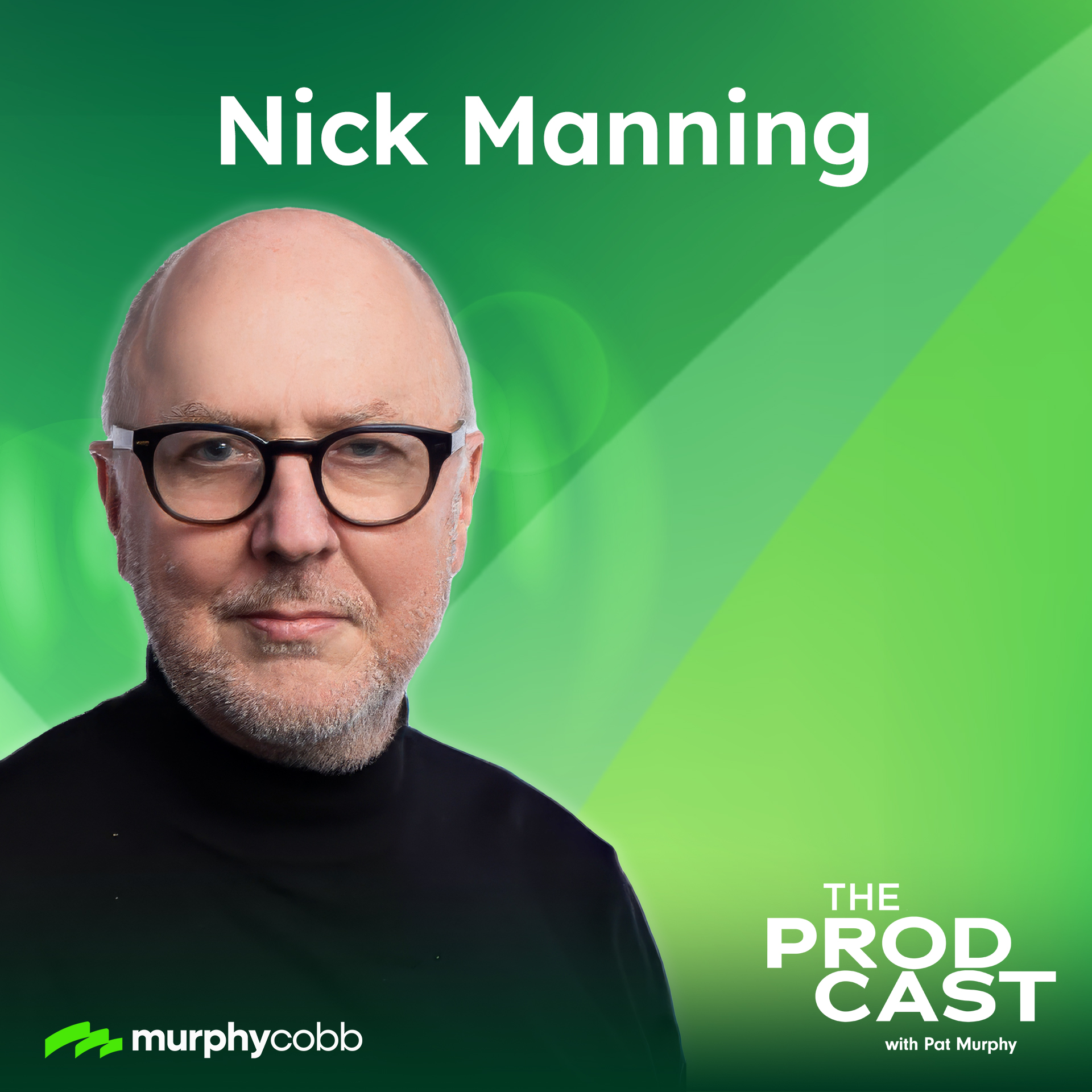
This week on The MCA Prodcast Pat Murphy is joined by Nick Manning, one of the most respected and influential voices in media transparency. Co-founder of Manning Gottlieb (now OMD), former CEO of OMD UK, and founder of independent consultancy Encyclomedia International, Nick has spent decades championing advertiser interests with a directness that has made him one of the industry’s most necessary voices.
Nick considers how the advertising industry has potentially lost its way. The conflation of ‘non-working spend’. with production is, he argues, one of the most damaging ideas in modern marketing: if the advertising you make is brilliant, every pound spent making it is working. What the industry has instead chased is performance through direct response and dashboard metrics at the expense of the kind of beautifully crafted material that actually builds brands.
Nick is also very outspoken about the lack of transparency in the industy and the Publicis acquisition of LiveRamp (which was announced the week of recording) gives Nick a live example. While industry commentary focused on what the deal meant for agencies and ad tech, Nick filed an article asking a different question: what does it mean for advertisers? The programmatic market has been inherently inefficient for advertisers for nearly twenty years, and moving money from one set of hands to another does not fix that. What it does do is concentrate more control of the advertising supply chain within a single holding group. He argues that the need for genuinely independent advisors, free of holding company structures, is now more crucial than ever.
Nick is a co-founder of ‘Advertising Who Cares’ which is a grassroots movement set up to protect the advertising industry. It is not a campaign to return to the past, but a call to remember what great advertising actually does: build brands over time, and deliver returns that a performance dashboard cannot measure.
Outside the industry, Nick writes local history books for charity, is midway through a postgraduate diploma in Spanish and Latin American studies, and is never far away from a very bad pun.
See Nick’s favourite ad: Marston’s Pedigree – Team Portrait (1995)
Hosted by Pat Murphy
Connect with Murphy Cobb and The Prodcast:
Murphy Cobb & Associates | The MCA Prodcast | LinkedIn | Instagram | Email
— This Week's Guest
Nick Manning
Co-Founder - Advertising: Who Cares?
— Nick's Favourite Ad
Marston's Pedigree - Team Portrait (1995)
— Full EPisode Transcript - Expand to read and search
— Full EPisode Transcript - Expand to read and search
Pat Murphy:
Hi and welcome to the Prodcast, your fix for everything innovative in advertising production. I’m Pat Murphy and I’ve been working in this industry for more than 35 years now. I’ve seen a lot of changes, but know there’s plenty more around the corner.
Each week on the podcast, you’ll get to hear from one of the movers and shakers who is shaping the world of advertising and production for the future. And we’ll dive into some of the key challenges facing our sector today and how we’re best placed to overcome them.
Today’s guest is someone I’ve been looking forward to speaking with very much, Nick Manning, one of the most respected and influential figures in the global media industry.
As the co-founder of Manning Gottlieb, now part of OMD, Nick helped to shape the modern media landscape long before digital disruption took hold. His career spans senior leadership roles including CEO of OMD UK, Chief Strategy Officer at Ubiquity, and founder of Encyclomedia International, which is his own consultancy, where he advises brands on media strategy, transparency, and operational excellence.
Nick has been a driving force behind industry reform, contributing to the ANA’s landmark work on media transparency, and consistently championing advertiser interests. His advocacy for accountability and better governance, and his ability to cut through complexity with uncommon clarity. Nick continues to challenge the industry to think smarter, act responsibly, and build a healthier, more transparent advertising marketplace.
Nick, thank you so much for coming to the podcast today.
Nick Manning:
Well, I’m not sure how to follow that. I mean, I’m gonna disappoint now, aren’t I?
Pat Murphy:
Well, you know, I do that every time, and everyone says the same thing. But you know, it’s all true.
Nick Manning:
Well, objectively, yes, I’m afraid it is, but the thing is that I don’t really like to talk about myself very much, so I’m glad you did it for me.
Pat Murphy:
And you know, after all of that, normally people kind of head off to the golf course at the end of their kind of career time, but you actually kind of still working incredibly hard. And love being an agitator and a truth teller. How do you feel about that description and where does that instinct come from?
Nick Manning:
I really don’t know. All I can tell you is that when I was very young, still at primary school, I remember somebody — I think it was a teacher — said to me, you know what, you should be a reporter when you grow up. And I have the instincts of a journalist or reporter. And a lot of what I do right now is a bit in that department, really. And it’s curiosity.
If I don’t understand something, I do need to understand it. Except for anything technical or mechanical, anything to do with the mind, I’m very, very happy with. But anything that’s an object or an implement, forget about it. But yeah, I just got this kind of curiosity bug and it’s kind of like a curse and a blessing at the same time.
I’ve got no off switch, so I’m just gonna have to carry on for a bit.
Pat Murphy:
Fair enough. And with that incredible career behind you, how did it actually all start? Was media something you always wanted to do when you left university or something?
Nick Manning:
No, well, it’s funny really, because when I was in my final year at university, I went to see… we used to call them the appointments office, but I called them the disappointments office. And I was doing modern languages – French and Spanish – and they said, oh yeah, French and Spanish, basically there’s only two things you should do really: one is insurance broking and the other one is advertising. And when it comes to advertising, if you’re not numerate, as you aren’t, then you need to go into account management.
So I had interviews at all sorts of advertising agencies with some very well known people, including Stanley Pollett of Bosman Pollett . Yadda yadda, this is really aging me. And they rejected me, all of them rejected me.
And so I defaulted back into insurance broking for five months. Couldn’t stand that. And then eventually a friend of mine was selling television airtime for Granada TV. He said, ‘oh, there’s an agency called CIA looking for a television buyer’ which I thought was the actual physical act of buying television sets, but once he’d explained to me what that actually meant, I went for an interview and got the job.
Pat Murphy:
What was the name of that company that you were at?
Nick Manning:
Well, it was Chris Ingram Associates — CIA. And I was one of the first generation, the really first generation of people who had never worked in a full service advertising agency, because the media independents as they were called then were new. And so I’m again one of the very few who didn’t have the benefit of working in an agency environment. But actually, later on that didn’t hold us back at all because we actually loved working with agencies when we set up our own media agency. And so in many ways, not having worked in a creative agency wasn’t a handicap. And we ended up, as a company when we set our agency up, working very, very closely with some of the best agencies there’s ever been. Which was one of the highlights of my career so far.
Pat Murphy:
And was TV specifically your favourite medium? Because you would have done print and radio and stuff like that at that time.
Nick Manning:
The way it worked… well, I mean, I was only ever television and radio. I had virtually no exposure to anything else. And television in those days, of course, was – and still is of course – a massive medium. But my true loves are TV and radio. They always have been, always will be. And I still work quite a lot in the television world, less so in the radio world these days, but they’ve always been my speciality.
Pat Murphy:
There’s only a couple of groups left in the radio world, anyway.
Nick Manning:
Well, that’s true. You either work for Bauer or Global now, and that’s kind of it!
Pat Murphy:
Exactly. But if you were starting your career again today, Nick, what would you have done differently? Anything specific?
Nick Manning:
Not really, because at that age you’re kind of feeling your way through, aren’t you?
I come from a background where… I had no business background. My parents weren’t business people, they weren’t able to guide me in any way. I didn’t really have a peer group either. So I just had to feel my way through, like a thread. So yeah, I think hindsight’s a wonderful thing — all sorts of things I could have done differently, but I had no idea at that stage.
So it was just experimentation and chance and serendipity and all those kind of wonderful things.
Pat Murphy:
Now you have a very strong opinion about the current kind of media ecosystems. I do. And obviously you are kind of on the peripherals now, doing a lot of advising for clients. What for you would look like a really good healthy media ecosystem if you had a chance to build one from scratch?
Nick Manning:
The main thing that I believe in is that I’m a firm believer in the power of advertising, which is the important thing to state. And any medium or range of media which deliver powerful, effective advertising messages which respect the viewer and listener are, for me, the most effective way to make advertising work.
And unfortunately we’ve gone down a bit of a rabbit hole away from that. And sometimes people think, oh, you mean television, don’t you? And you kinda go, no, it’s not about television versus any other media. It’s about using a range of channels in the right way to achieve the right effect by being engaging with consumers.
And the truth is that it’s much more engaging to show somebody a piece of beautifully crafted material than try to capture their attention in two seconds while they’re scrolling on their mobile phones.
So there’s a role for all media for the various clients. There’s nothing that’s not relevant, but there are some things which just work harder than others, and they tend to be because of the skill and ability of the people crafting the messages and the people delivering those messages. It’s that simple, Pat.
And the trouble is that so many people have lost sight of that. And of course, and this sounds too simple to be true, it’s easier to build something when you’re broadcasting a message to a collective audience, whether that be 10 people, 10 thousand people, 10 million people. It’s much better to do that than to try and address everybody on a one-by-one basis when they’re scrolling for two seconds on their phone.
So it doesn’t mean to say that everything has to be mass media or niche media. It’s about getting the permutations right based on what you’re trying to achieve for the advertiser and their objectives. Again, it doesn’t have to be complicated, any of this. It just has to be reasserted that these are the things that make advertising work.
Pat Murphy:
Now just coming back to something you just said – one of the things that procurement specifically talk about is media being working spend and production being non-working spend. And yet my view is that they’re both as important as each other. They should both be called working spend. There’s no point in making a rubbish ad if you’re spending loads on media – it’s just not going to work. So what’s your view on that?
Nick Manning:
Well, it’s all working spend. I mean, define working. Working means effective. And if you’re spending your money effectively by making brilliant advertising, producing it beautifully and effectively and showing it to the right people in the right way, that’s all working. So it’s all about what the definition of working is. And basically, working means you put a pound in and you get three pounds back. And the way that you do that is to make sure that each of the elements that you’re investing in are working at their maximum. And that’s kind of not where we are. So I really rail against this definition of non-working spend. I don’t think it makes any sense at all. But the trouble is, and there are some very enlightened procurement people out there, and I work with a number of them but pure procurement can be quite harmful if it just looks at saving money rather than optimising money.
And I think, fortunately, we’re starting to see a corner being turned where procurement is starting to assert itself and say, ‘no, actually, you know what, We can add value. We can help the growth agenda rather than just trying to produce efficiencies and savings’.
Pat Murphy:
Yeah. Do you think that also comes back to maybe the way that marketing and procurement get KPI’d? And there’s quite a lot of non-alignment there.
Nick Manning:
Completely. And I hope that’s changing too. In fact, the conference I co-chaired in March talked quite a bit about this and the need for much greater alignment between the incentives for marketing people and the incentives for procurement people. And I think what we’re seeing now is that the procurement people, because they’re starting to see their agenda and their role as being much more based around growth and business success, then we’re gonna start seeing a coming together of the two more than we have in the past.
Having said all that, particularly in the media world, procurement is still handling media pitching in a way that they have done for the last twenty years. And that should change as well, which is a subject I shall be returning to probably later on in this podcast.
Pat Murphy:
Look, Nick, no conversation about media transparency can really avoid the elephant in the room — the Richard Foster versus WPP whistleblower case in New York City. Will the media industry ever truly clean their act up, do you think?
Nick Manning:
Well, I think transparency takes a number of different guises, and I have to caveat all this by declaring that because I’m working with Richard Foster’s attorneys as an expert witness on this, everything I say about it has to be seen through that particular lens. But I think the reason I was chosen to do this was because of my track record of talking about this for the last twenty years. Slightly longer, actually.
Transparency’s been on the agenda now for all that time and before. And all that’s happened really over the last twenty years is that the industry has become less and less transparent because of the way that digital developed with its plethora of ad tech providers, which is now obviously going into the era of AI to make it lean even less transparent, if you like. And all of the growth media over the last twenty years have been untransparent media, because digital media is inherently untransparent. So it will never be transparent, because that’s the nature of the industry.
So it’s beholden upon each and every advertiser to figure out what level of transparency they are prepared to accept and tolerate. But also they have to bring governance and contract law into the equation as well. It’s amazing what you can achieve when you’ve got the right advisors sitting on your side and know what you need to get out of the agencies and out of their contracts.
And there are still a lot of advertisers who are still not there yet. Just to give you a sense of that, I’m taking part in a webinar with the ANA on June the first, and there will be some new data presented in that webinar which shows that still the majority of advertisers think there isn’t a transparency problem in the industry — which means that they are living in a slightly artificial world, in my view. But I’m not the only one who thinks that.
But the reality is, the industry is inherently untransparent. So you’ve got to work with the right people to advise you on how you can make it more transparent, and then you need to enshrine that in the right kind of contract and governance support.
Pat Murphy:
Because we were talking the other day, and the conversation was really around the fact that advertisers – the clients themselves – are not speaking up. And therefore having someone like yourself on behalf of the brands talking for them is an important thing. And what actually needs to happen to regain client trust?
Nick Manning:
It’s amazing. About an hour ago I filed an article which I hope will come out later on today, which is about the second biggest news of the week, really. So this is about the Publicis acquisition of LiveRamp, which has been a wash throughout the industry all week. And everyone was giving their hot takes on it and what it means for the agency world and what it means for the ad-tech world specifically. And no one was talking up on behalf of the advertisers.
Individual advertisers aren’t gonna talk about that because it’s their business, and the trade associations are not allowed to take a position on that because their constitution prevents them from doing so. So you would think that the only implications of Publicis / LiveRamp are on agencies and ad tech. Actually it’s all about the people who spend the money and it’s all about what is the benefit of this to advertisers.
And again, this gets forgotten in the wash because the commentariat all comes from an agency and an ad tech perspective. Same applies to production in so many instances as well. So what advertisers need is somebody telling them individually, really, what the implications of this deal are. Does it affect them? How does it affect them?
And the point I make in the article is that we’ve been dealing in the programmatic market now for nearly twenty years and it is inherently inefficient and ineffective for advertisers. And actually all that happens in this deal is that the money goes from pocket A to pocket B in the agencies and the ad tech industry. It doesn’t solve any of the problems of online advertising inefficiency or ineffectiveness whatsoever. It’s simply rearranging the money and the way it passes through.
It goes from somebody’s hands into Publicis’s hands but doesn’t improve a thing. And that’s the only thing that matters to me: is it going to fix the problems of the industry? And the answer is no, because LiveRamp has been part of the industry since around 2008. So just because it’s going to be under new ownership doesn’t make it any better.
The other thing which is absolutely true is that now that Publicis will have more control over all of the pipes in the advertising chain, then there’s a danger that the whole system becomes even less transparent to clients of Publicis and others. So we’ve got to stand up and talk about advertisers the whole time, because they’re the guys who pay the money. They pay everybody. You wouldn’t think that at times.
Pat Murphy:
And as you were talking about LiveRamp, very similarly in the production world, of course, these big holding companies want to have all of the production under their one roof. In the same way. Do you think that is a good thing or not such a good thing for clients?
Nick Manning:
I don’t think it can be a good thing, really, because in the end a lot of this is just about understanding and transparency, but it’s also about spending money in the most efficient and effective way possible.
And there’s no reason why clients shouldn’t pursue that route if they have the right people advising them on doing that and they go through proper, rigorous processes – the tendering process, the choice of partners, all of that stuff. But they need to have expert, independent people advising them and guiding them. Otherwise you end up accepting what you’re told by the agencies. And whether we like it or not, the agencies are no longer independent, objective, impartial advisors to their clients. And they haven’t been for a long time, and they never will be again, because their financial model doesn’t really allow for that.
So you’ve got to have independent, impartial advisors who are not part of the agency setup, showing you how to hack your way through the jungle. If you haven’t got people who’ve done that before, then it is a jungle and it remains a jungle.
Pat Murphy:
So that means the roles of someone like yourself or ourselves as independents out in the market for clients becomes even more important for governance.
Nick Manning:
Well, it has to, doesn’t it? Because the more complex everything gets… and the permutations of content and channel now are infinite, and also the formats. The formats on TikTok aren’t the same as the formats on Instagram, aren’t the same as the formats elsewhere. So everything… the media, the formats, the number of versions of the content that you need, the assets that you need, the management of those assets is now a complex Rubik’s Cube.
And unless you’ve got experts advising you on that independently, it’s very easy to get lost in it and spend too much money on things you shouldn’t spend, or underspend on things that aren’t going to be effective, which is just as bad a problem.
Also, in an industry where it is now theoretically quick, easy and cheap to make advertising, it becomes quicker, easier and cheaper to make bad advertising. But it gives the appearance of good advertising because you’re measuring it on a dashboard. And if you get a flicker on a dashboard, then you might find that version eighty-nine of your hundred versions of the video is showing more life than version eighty-eight.
And that’s kind of the rabbit hole that we’ve fallen into.
Pat Murphy:
Now you co-founded Advertising: Who Cares. What is that?
Nick Manning:
It’s a very good question! It’s a grassroots movement set up by people who care about advertising because we believe it is an important industry. Not least in the UK, by the way, where it is responsible for tens of thousands of jobs. And I might come back to that in a second.
Advertising plays an important role in culture, in society, in business, in the economy, in employment. So it’s an important industry. It has its fair share of detractors, of course, but it is an important industry.
But the danger is it’s becoming a lot weaker because of its lack of efficiency and effectiveness. And the way that now advertising tends to be seen as a promotional discipline as opposed to a discipline that builds brands or has a wider effect.
So much advertising now has become direct response advertising, really, or performance advertising. And performance advertising tends to be less effective than other kinds of advertising, not least of all because when you’re in performance advertising you’re chasing only people who are active in the marketplace at that time. And in most industries that’s only about five percent of the audience. So again, the industry has been disappearing down something of a rabbit hole there.
So in Advertising: Who Cares wants to do is remind everybody about what great advertising looks like, how effective it can be, but also taking it from the consumer angle, which is that people welcome good advertising into their lives, whereas bad advertising is distinctly unwelcome. And we know from all the data that it can be a real turn-off with the public, and that has an impact on brands and on media channels and so on.
So we’re just trying to draw attention, really, in a polite way, to the things that are going wrong, and then talk about how we think we can put them right.
Pat Murphy:
Now when we both started out in advertising a little number of years ago, media channels were somewhat simpler and revenue models were well known at that time. But we have this explosion of influencer marketing, new media owners and commissioning practices, brands like M&S moving into creating mini-series. How do you think funding models are going to evolve?
Nick Manning:
Well, they should evolve, because there is so much choice now in terms of how you can build a brand and build a business. And what that means is – let’s take influencer and creator, which has become one of the most successful phenomena of recent times, to some people’s surprise. I have to confess, slightly to mine! But people are spending money behind it because they know it’s effective, because it can be done very well and be an authentic voice of the brand and all those kind of things. But the funding model for that has to be very different to the funding model for everything else, obviously.
So I think one of the roles of agencies really is to, A, make the most of those channels and the permutation of channels, which is crucial, but also to come up with new ways of charging for them and making them work.
So the default business models of the past need to be challenged at all stages, really. And I think they’re starting to be as well.
The whole outcomes-based remuneration thing is trying to challenge that and say, you know, there must be a better way of doing this, because inputs are one thing but outcomes are another. So I think we’re in a period of transition here, with AI coming in so much as well, changing the cost basis of everything — new models have to emerge and will emerge from this. We need to make sure they’re good ones, though, because there are plenty of bad ones around.
Pat Murphy:
How do you see AI reshaping media planning and buying, creative and production?
Nick Manning:
Well, it’s gonna shape each of those three differently, isn’t it? So obviously generative AI is gonna reshape the way that creative material is made. And you can define creative material in a number of different ways but what is possible now with AI is completely different to how it was before ChatGPT launched in October ‘22 and everything since. The speed — it’s been a revolution, not a transformation. It’s been fast, it’s been furious and it’s happening all the time.
So generative AI is changing that. In terms of the effect of AI on production, obviously it’s changing workflows, it’s changing speed, it’s changing the cost base. And people talk about AI mostly in terms of what generative AI is doing for the industry, but it’s also transforming media. And yesterday — which I think is much bigger news than Publicis and LiveRamp: Google announced a new suite of tools that they’re bringing into the marketplace to transform the search market for the first time in many, many years and people underestimate that sort of thing. So there’s been, obviously since yesterday’s announcement from Google, quite a bit about that, but it’s overshadowed by Publicis LiveRamp, and yet it’s far, far more important than that, because it changes the dynamics of media access, websites, search and everything else.
And you know, the people who are driving change in the media industry tend to be the biggest corporations in the world who rely on advertising for their income. So that’s why they invest so much in changing the advertising market, because they want to dominate the advertising market. So that’s why advertisers need people who are objective advisors – to advise them on what this means for them, without having a vested interest in how the advisor makes more money out of specific solutions.
Pat Murphy:
And we’ve seen in the past where media has kind of decoupled from the creative agencies. And are you seeing that kind of reverse back? We talked the other day about production and media getting much closer together.
Nick Manning:
Well, they are and they should be, because there should be a reconvergence and a reintegration – not because it’s about creative and media per se and having the same people in the same building talking about it together – but the interface between the content and the channel are becoming indivisible.
So if you want to be on TikTok, there’s no real gap between the material produced for TikTok and the activation on TikTok. It doesn’t have to be the kind of handoff that we used to see between creative agency and media agency, because the tools that you can use on the digital platforms can do it all for you.
So I think the way that this is going to change is that there will be a reconvergence and a coming together. And actually the big holding companies are moving very much in that direction with their new platforms.
And of course Meta and Google and Amazon and everybody else is trying to do exactly the same thing. I mean, Meta now say, you tell us what you want, we’ll do it all for you: we’ll create the ad, we’ll create different versions of the ad, we’ll place the ad, and they’re all moving in that direction.
Pat Murphy:
But global ad spend grew eight point six percent last year while holding companies’ revenue actually declined one point two percent. That gap is the whole story, isn’t it?
Nick Manning:
It is, because the advertising spend is now coming mostly from a lot of people who aren’t using the traditional agency structures. And those numbers are very stark. It’s absolutely true that the vast majority of the increase that’s coming through is coming from a range of advertisers who are either doing it themselves, or using different people to do it, or using self-service platforms.
So the conventional agency setups are challenged and need to be challenged, because they’ve got to earn their place in the world. And for the last however many years they’ve really been coasting on a slightly easy time, really, because everybody defaulted to going through agencies. And by the way, this is not anti-agency.
I mean, I firmly believe that agencies add and can add and should add an enormous amount of value to making better ads and placing them better and producing them better. So I’m not advocating against agencies.
If anything, I’d like to see the agencies improving what they do and finding new ways to do it and doing it better and finding better ways to charge for it, and not charging for it in ways which some advertisers may feel are not strictly kosher.
Pat Murphy:
In our experience we’re seeing a lot of smaller boutique agencies being much more transparent and building much better relationships with clients. Because they’re not trying to hide covert revenue.
Nick Manning:
Yes. Well, if you want to have a good relationship with a client, it’s a good idea not to do things that they don’t know about. I mean, trust has been talked about incessantly, there are whole books on it now. But it’s obvious, isn’t it, really? If you’re an advisor to a client, which most agencies are, then you need to do things in a trustworthy way, but it also means you need to charge in an open, transparent and trustworthy way as well.
If you are having to make money in other ways, it probably means that you’re not getting your charging right in the first place. You may have pitched for the business on an extremely low basis and hope you can make money at the back end instead, which goes on much more than virtually anything else.
So yes, trust needs to come back. The only way trust comes back is if agencies are much more open and build relationships which are based on trust.
Pat Murphy:
Now you did a piece recently around the ANA financial management conference about Forrester’s report that says traditional media is coming back. Did it ever go away? What’s your opinion about it?
Nick Manning:
Well, the Forrester report – I had to be quite polite about this, because, well, there are a number of reasons. One is that the ANA and I go back a long way. We are very supportive of each other. I’m helping out with their webinar on June 1st, etc etc. And so I didn’t want to be too controversial, because Forrester was standing up at their conference and saying things which I know to be untrue. And most interestingly of all, I think the ANA’s own research proves them to be untrue as well. And what they were doing – and it’s really interesting this – they were saying that principal-based media, which is where the media agencies sell media to clients as well as buying it for them, is highly in demand amongst advertisers. And advertisers really like it because it gives them bigger discounts and turns non-working into working, yadda yadda yadda.
That’s a narrative that’s been spun by the agency groups, who still command the lion’s share of world advertising. But it’s actually not true. If you actually look at the data, the ANA data, but you also look at the court papers for Foster versus WPP – it is absolutely not the case that advertisers are welcoming principal media into their lives with open arms. They’re very sceptical about it. In fact, there’s an ISBA study on this as well.
So the narrative is incorrect, and I felt that I ought to try and put an alternative version into the market.
Forrester were presenting at the conference and they presented what they were going to present. All I was trying to do was sow a few seeds of doubt in people. But actually, Pat, what I was doing – it comes back to the same thing again – I was reflecting what the advertisers say. Because that’s what the studies say, and it’s also what the Foster papers say! And the trouble is advertisers have individual voices that they don’t want to really raise, whereas the agency groups, the ad tech industry, and all those kind of guys want to talk about these things incessantly. So everybody believes the louder voices that you hear from the supply side, but hardly ever hears anything from the advertisers. So everybody starts to believe the louder voices because they don’t hear the quieter ones.
Pat Murphy:
I bet they didn’t invite you to the bar for a drink later, though, did they?
Nick Manning:
I wasn’t there. It was in Orlando and I wasn’t gonna go to Orlando to not be bought a drink!
Pat Murphy:
Now what’s the best piece of advice you’ve ever received in your whole career?
Nick Manning:
It wasn’t so much advice, but it sort of happened anyway. Partnership is really important and I’ve worked with some absolutely brilliant people over the years. Naming names is always dangerous because you end up pissing people off. But there are two people who played a particularly strong role in my career. One was Colin Gottlieb – he was my partner and co-founder of our agency group. And the other one is Michael Greenlease, with whom I worked for eight to ten years at Ubiquity. So it wasn’t really advice, it was just happenstance as well as other things that I ended up working with both Colin and Mike.
Actually, there was a piece of advice – there was one person who said to me, oh, Mike’s coming back from the US, you should have a chat. And that’s how it led on to a very, very successful partnership, but also friendship. Mike and I speak most days at the moment. Working with people – the right people – is crucial.
So if you’re gonna have advice, it would be: work with the right people and surround yourself with the right people and make sure that you have a good, strong relationship with them.
Pat Murphy:
Absolutely brilliant advice. Now I discovered something about you, Nick! I know that you write prolifically for the industry, but you write other kinds of things as well. You write books specifically. So tell us a little bit about that.
Nick Manning:
Well, yes, in fact I do write books as a side hustle, although it’s not a very lucrative one because there’s not much money in books. But in the end, the thing that drives me more than anything else is language. And this goes back to my childhood really. I’ve always been essentially a languages person, certainly not a numbers person, although the university disappointment people were wrong – they said you don’t go into media if you’re not numerate, and it’s all worked out okay for me!
But I love language. So two things really: one is that I write books about history. They’re not history books, they’re about history, specifically about the area I live in. I do that for fun, but I also do it for charity, because the proceeds from the books support two local charities as well, which is quite nice.
The other part of this is that I like languages, so I’m actually doing a postgraduate diploma in Spanish and Latin American studies in my spare time as well at the moment. And again, that’s about language – that’s about taking a chunk of text in English and translating it into Spanish, or taking a chunk of Spanish text and trying to interpret and analyse what that’s all about. So it all comes back down in the end to languages. And if you ask anybody in my family, they will also tell you that I tell a lot of very bad dad jokes, and I’m never far away from a very bad pun.
Pat Murphy:
Nick, you’re such an underachiever!
I have found out something rather sad about you, though. You’re a fan of Fulham Football Club.
Nick Manning:
Yes… but let’s move on quickly from that point, shall we?
Pat Murphy:
Because I support the other team down the road!
Nick Manning:
Well, I know, and one day we’ll convert you. But it might not
Pat Murphy:
OK, look, we’re running out of time. We’re gonna come straight to the final question, which we always ask every guest. It’s the one that’s become the highlight of our podcast. What’s your favourite ad of all time, Nick?
Nick Manning:
You did tell me you were gonna ask this, and I had to think long and hard about it. I’ve chosen an ad that no one will remember, and very few people will ever have seen or heard. So it won’t mean much to people, but it’s to do with my career, but it’s also to do with the power of great advertising. We were lucky enough, when we set up our agency, to be involved with an agency called Simons Palmer Denton Clemo and Johnson.
Pat Murphy:
Remember them well.
Nick Manning:
Absolutely. They were one of the best agencies I think there’s ever been. And they produced work which was different, distinctive, novel, crazy – some of it. So crazy, they made a campaign for Virgin Atlantic that Richard Branson hated so much, he fired the agency. But not the people who commissioned the agency to do it.
But they made an ad that no one would have seen for many, many years, called ‘Team Portrait’, and it advertises a brand called Marston’s Pedigree.
[ADVERT CLIP]
One of the best ads ever made. It’s beautiful to watch. The words are clever. It’s a brilliant product. And it was enormously successful. It had a massive effect on their fortunes in their heartland, which is the Midlands of the UK. And I worked on that business very hard and loved it.
It’s always good to work on a beer brand, I think. And the creative team – Chris Palmer, Mark Denton – were fantastic. Carl Johnson, Simon Clemo, Paul Simons – the partners were world class people. And we loved working with those guys. We worked with them on Nike. They did the big posters, you know — “66 was a great year for British football. Eric Cantona was born.” Another great ad. And many others.
So my favourite ads tend to be associated with the things I worked on during the course of my career.
Pat Murphy:
Well, we’re gonna post that up onto the Prodcast website. Thank you so much for that suggestion. Nick, it’s been a true pleasure.
Nick Manning:
Well, it’s been a pleasure for me too. I really, really don’t like talking about myself. I find it quite difficult, but you’ve managed to extract quite a lot of confessions from me, so congratulations.
Pat Murphy:
Today I chatted with Nick Manning, for years one of the most respected and influential figures in the global media industry. He always stands up and gives a voice for the benefit of clients and continues to challenge our industry to create a more transparent advertising marketplace.
To find out more about the Murphy Cobb Prodcast, please head to theprodcast.com where you’ll find details on all my guests, links to their favourite ads, and full transcriptions of all the episodes. If you have any comments, questions, or feedback, please email us at podcast@murphycobb.com.
I’m Pat Murphy, CEO of MCA. Do come and connect with us on LinkedIn or Instagram, all the links in the notes for this episode will be there. We’d love to hear from you.
Thanks again to Nick and to my production team at What Goes On Media. Thanks for listening. See you next time.